


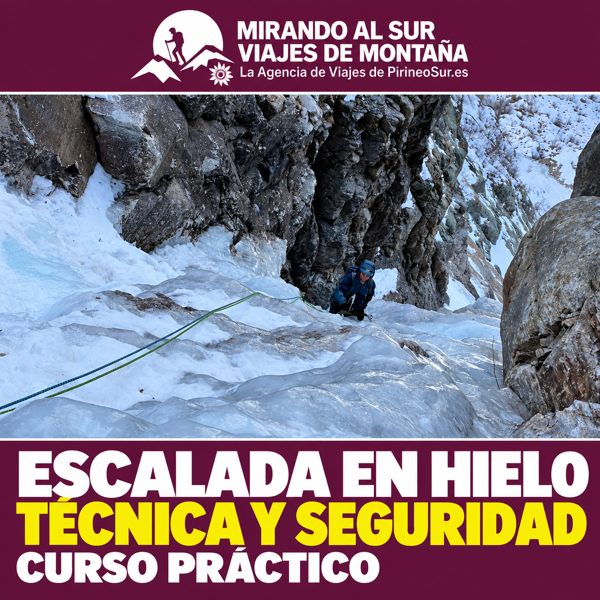
Options for Ice climbing course: technique, protection and belays
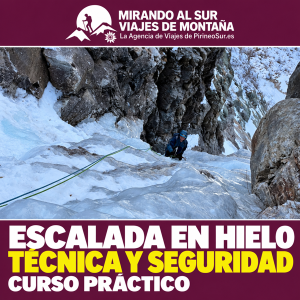
Ice climbing course: technique, protection and belays
Ice climbing course: technique, protection and belays
Special rate for 6 students
Mas Información y Reservas
125,00 €
Per person VAT included
Per person VAT included
From
Options for Ice climbing course: technique, protection and belays
Ice climbing course: technique, protection and belays
Develop your ice-climbing skills through movement, protection and belay practice. The course combines climbing technique and ropework for people with winter mountain experience who want to progress in the discipline.
Course content
- Ice-climbing equipment: use and care.
- Ice-tool technique and front-pointing.
- Efficient climbing movement.
- Protection and belaying on ice.
- Belays in ice and mixed terrain.
- Leading ice climbs.
Previous experience and personal equipment
- Winter mountain experience and completion of Mountaineering Level 1 or Rock Climbing Level 1.
- Individual equipment, including helmet, harness and personal anchor lanyard.
- At least semi-rigid boots compatible with technical semi-automatic crampons. Rigid boots and step-in crampons are recommended.
Practical information
- Standard duration: two days.
- Cogne, Italian Alps: a minimum of five days, combining training, supervised climbs and multi-pitch icefalls.
- Season: December to March.
- Hours: 08:00–15:00 for the standard programme.
- Group: maximum six participants.
- Locations: Sierra Nevada near Granada, Gredos in Ávila, the Pyrenees and the Alps.
- Dates: ask for dates and availability.
- Places: contact us for current availability.
Included
- Qualified mountain guide.
- Public liability insurance.
- Accident insurance.
- A photographic record of the course.
- Shared equipment, including ropes, belay devices and ice screws.
Frequently asked questions
How long is the Alpine programme?
The standard course lasts two days. Cogne in Italy requires at least five days and combines training, supervised climbs and multi-pitch icefalls.
What experience and boots are required?
Winter mountain experience and the stated prior course are required. Boots must be at least semi-rigid and compatible with the crampons; rigid boots and step-in crampons are recommended.
Images of Ice climbing course: technique, protection and belays


